
December 31, 2011

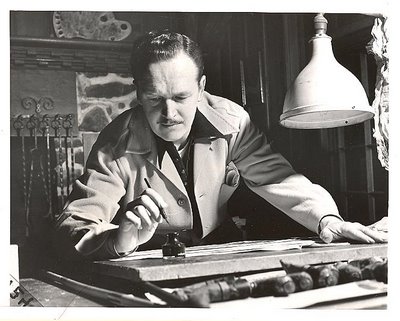
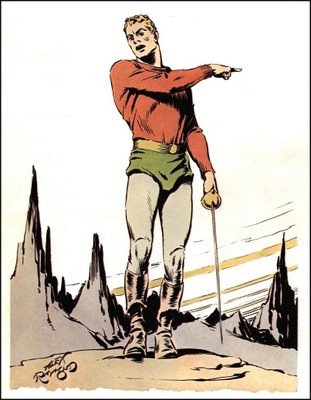
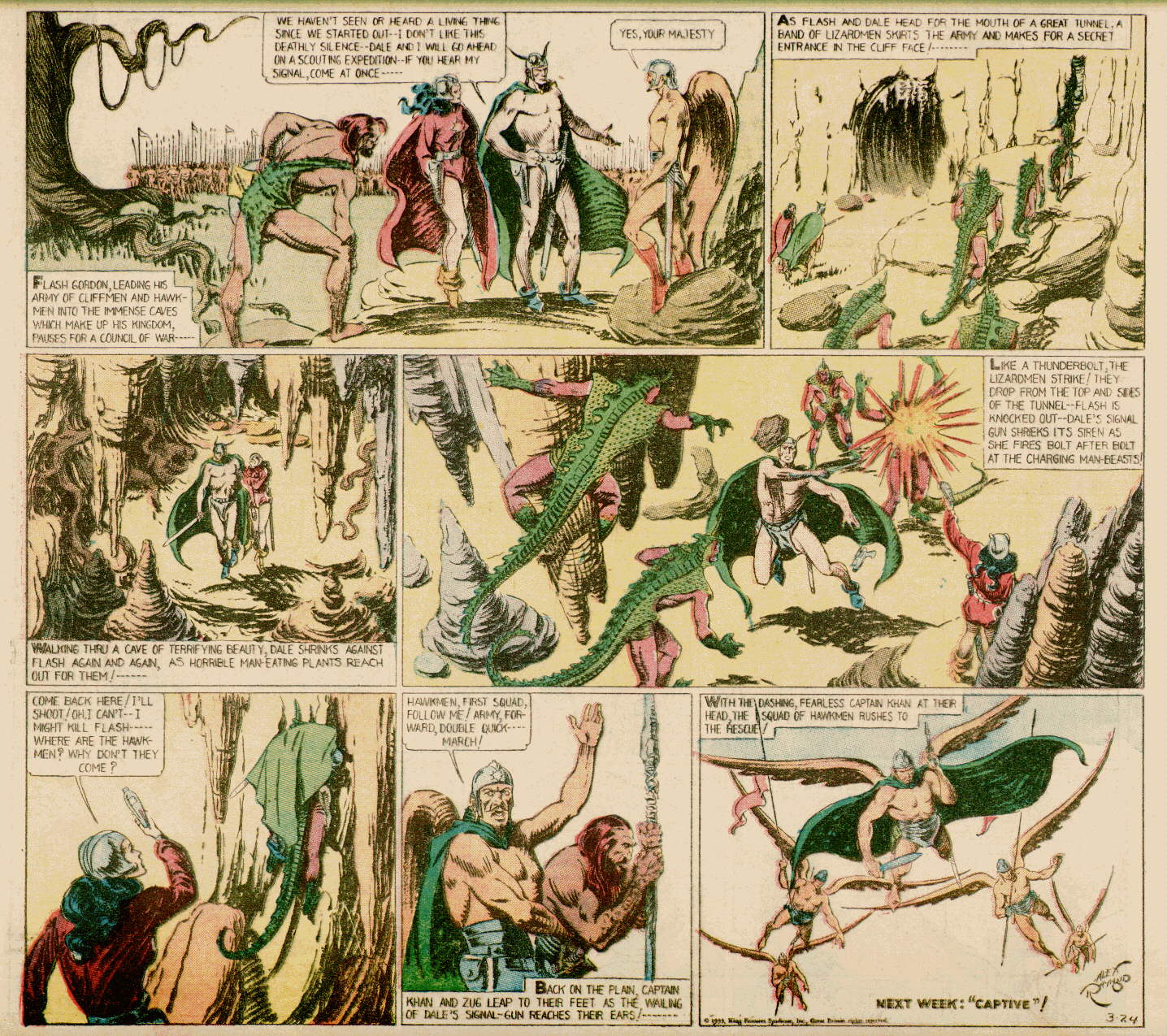
This is an undisputed classic character, in a classic strip, by a classic illustrator, Alex Raymond. Get the hint? This man CREATED Flash Gordon, among many other characters, and spawned legions of imitators, followers, and in fact nearly a whole genre.
I assume you know Flash Gordon. He has been constantly reinvented for every generation.
Alex Raymond’s “influence on other cartoonists was considerable during his lifetime and did not diminish after his death.” George Lucas has cited Raymond’s Flash Gordon as a major influence on his Star Wars films (which, cyclically, inspired the 1980 Flash Gordon film), while Raymond’s long shadow has fallen across the comics industry ever since his work saw print. Comics artists who have cited Raymond as a particularly significant influence on their work include Murphy Anderson, Jim Aparo, Frank Brunner, John Buscema, Gene Colan, Dick Dillin, José Luis García-López, Frank Giacoia, Bob Haney, Jack Katz, Joe Kubert, Mort Meskin, Sheldon Moldoff, Luis Garcia Mozos, Joe Orlando, John Romita Jr., Kurt Schaffenberger, Joe Sinnott, Dick Sprang and Alex Toth, among many others.
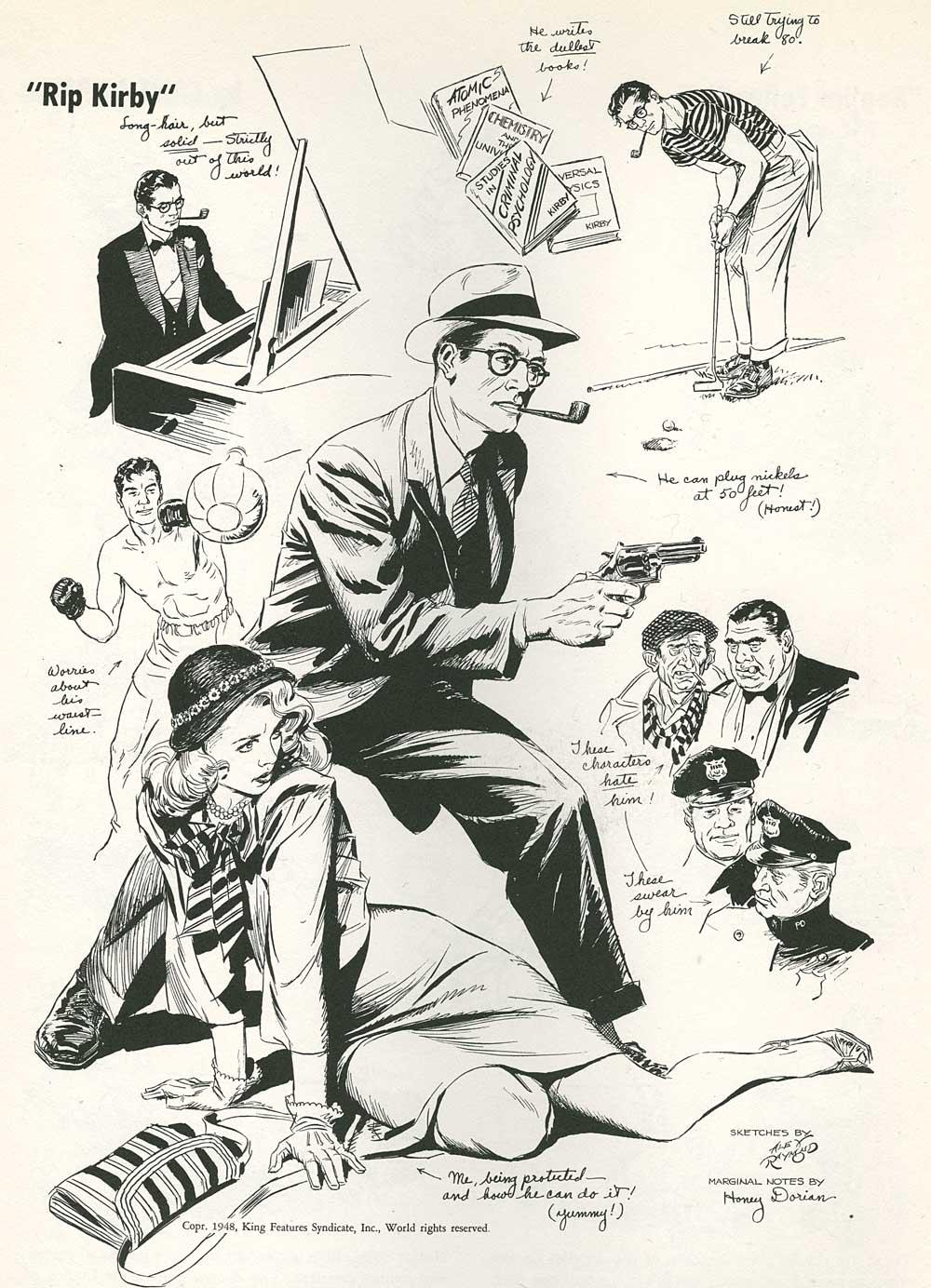
In particular, Raymond has been named as a key influence by many of the most influential and important comic book artists of all time. EC Comics-staple Al Williamson cites Raymond as a major influence, and is quoted as saying that Raymond was “the reason I became an artist”. Indeed, Williamson ultimately assisted on the Flash Gordon strips in the mid-1950s, and Rip Kirby in the mid-1960s (all post-Raymond). Key Golden Age artists credit Raymond with influencing their work. The artistic creators of Batman (Bob Kane) and Superman (Joe Shuster) credit him (alongside Milton Caniff, Billy DeBeck and Roy Crane) as having had a strong influence on their artistic development. Decades later, the herald of the Silver Age (and co-creator of most of Marvel Comics’s pantheon of heroes), Jack “King” Kirby also credits Raymond, alongside fellow strip artist Hal Foster, as a particular influence and inspiration.
I do not think I am exaggerating when I say that without this man, pop culture would be very, very different. Take for example the serials based on Flash Gordon. Their impact on films is almost as significant as the comic strip’s effect on that medium. By proxy, Alex Raymond is responsible for much of modern movie sci-fi.
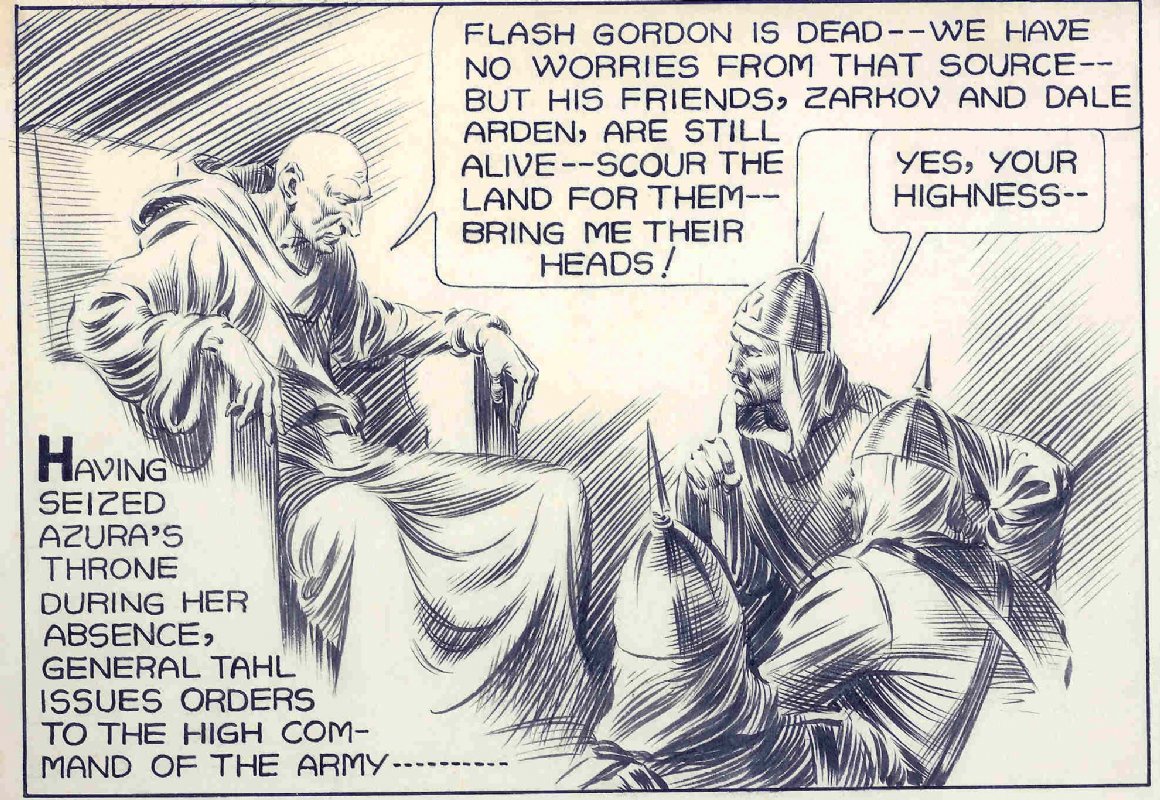
Yet for someone whose impact is so far-reaching, his body of work is known more by reputation than actual first-hand knowledge. So in the name of education, enjoy this gallery of Alex Raymond’s work, focusing primarily on Flash Gordon.
Please click on the thumbnails to enlarge.













 Mr. Blog's Tepid Ride
Your Comments