Tag Archives: teaching

The Blog That Was A Decade In The Making! Part Five

12 Oct

October 12, 2011

Part One can be found here,
Part Two is here,
you can find Part Three here,
and Part Four is here.

One thing that was true then, is true now, and is universally true wherever you go is that the newer you are, the more jobs you get stuck with after everyone else turns them down. That’s how I was given the job of newspaper advisor.

It didn’t seem like that at the time. My boss very casually asked me “how would you like to make some extra money?” and I naively said “I’d love to.” In reality it wasn’t that bad a job, once I realized I had to do most of it myself. My school never had a lot of enthusiasm for things like school newspapers and while I did get the students to write a couple of articles the layout and design was all up to me.

The previous newspaper advisor was still using the out-of-date methods of laying out the articles by hand on tabletop, the way newspapers were laid out in the old west. I used the very simple Microsoft Publisher program. The last few years our school newspapers were printed in-house on copy machines. I had mine professionally printed on newspaper from an outside vendor. Even though eight years later I was in charge of school’s best yearbook in history, this little two sheet newspaper has better memories for me.

But it was still a lot of work and not much money and it was a bit of a watershed moment when I finally had the seniority to pass it on to a rookie teacher. And for the record, after I left it was almost always printed in-house on copy paper.

In a previous entry I mentioned the Getaway program. Despite putting a lot of effort into it I wasn’t in it for long. Part of the trouble was that it was focused on math and science and I was an English teacher. While they did well in those subjects they didn’t do well enough in English to create a dedicated Getaway English class. There weren’t enough of them with high enough grades. While their other classes were Getaway only, the English class was half Getaway and half honors English. The honors kids were on too high a level (or the Getaway kids were too low) so I was in effect running two concurrent classes. That was OK, but the Getaway kids were often not in my class because they were participating in Getaway events, events which I should have been a part of as a Getaway teacher but I could not be involved in because of the other kids I was responsible for. I had to be in the classroom. Because I could not be included in most events I never really fit in with the Getaway staff.

The worst moment came when the Getaway kids had a pizza party on the football field and the other half of my class sat in my room and watched the party from the windows.

To be fair, on days when the Getaway kids were gone I gave the honors kids a free period. It was unfair any other way. How could they sit in a class and work when half of the same class got to go on trips and have parties?

I wasn’t long for the program and I didn’t miss it, the Mr. Anderson the AP, or the other teachers. However, I knew I would miss the cd players and other things I ordered so even after I was no longer in the program I held on to the things I used. Selfish? Maybe. But they stayed in the school and were used for the students and I shared them with the other teachers. At least those who knew I had them.

Things changed on a regular basis at the DOE. It all depended on who was in charge/ what was in vogue/ whichever article had just been published/ who was running the meeting/ whatever some other school district had done/ what new book someone discovered/ what the Chancellor ate for breakfast. Take the Aim, for example.

The Aim is the point of each lesson. It was always written on the board at the start of every lesson. Don’t confuse that with the Objective, which sounds the same but was not. This was a common type of Aim when I started teaching:

AIM: To discover metaphors in Tom Sawyer.

Clear, isn’t it?

At some point it was decided that all Aims had to be written in the form of a question.

AIM: What are the metaphors in Tom Sawyer?

The reason was that the Aim should be answerable, so that if you asked the aim at the end of the lesson the answer would show that the students learned. If they could answer the Aim the lesson was successful.

But that was not considered a good Aim. It was a closed question. Even if you give the metaphors it shows only that the students can parrot the answer, not that they can think and discover the answer.

AIM: How can we discover the metaphors in Tom Sawyer?

That’s good. But it didn’t stop there.

Eventually it was decided that the Aim should be elicited. In other words, in a reversal of decades of educational policy, it was decided that the Aim would be left blank.

AIM:

At first this freaked out the students. The intent was that after the lesson the teacher would ask the class “so what was the aim of this lesson?” and if they could answer it correctly you did your job.

That idea didn’t last long and soon Aims were back on the board. But that wasn’t good enough. Not only did Aims need to be on the board, so did such stuff as Do Now, Objective, Motivation, Agenda, Rubric, and of course Homework. This goal was to outline the entire lesson on the board for the students to follow. It was ridiculous. In effect it put your lesson plan on the board and it was pointless. The students did not need a step by step, question by question guide to the lesson. That was for the teacher to follow. It also made lessons less dynamic and more rigid. It took out flexibility and creativity. It also took away the spontaneous “A-ha!” moments that students love. There is nothing better than when a student has everything click in their heads. This was akin to a magician standing in front of an audience saying “I am going to make this rabbit disappear and here is how I am going to do it,” then proceeding to explain every movement and sleight of hand, and showing the trick compartments and phony rabbit. It made everything clinical and uninteresting. But that didn’t last long either.

Rubrics weren’t bad in theory but as with everything the DOE touched, awful in execution.

They are standards for grading. For example, if the class did a skit, what would be a 100, what would be a 90, what content would be looked for, etc. Not only did it make it easy for the students to understand what was expected of them, it made it easy for the teacher to grade.

The problem was that by this point the DOE decided that the students needed to be in every step of the process. The class had to develop the rubrics. They decided what passing or failing meant, they decided all aspects of grading. Now in reality a good teacher could guide the outcome so no class had a standard like “45 is a passing grade” but it was a lot of wasted class time and effort.
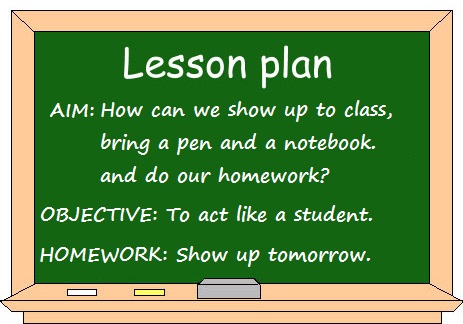
Yes it helped the students take ownership of the learning process, but I was always of the opinion that my students could take ownership of it simply by showing up prepared with a pen and paper, which they rarely did. You see, the DOE was in love with high-concept ideas that might have worked in high performing schools with high level kids but that is not the reality of the majority of NYC schools. Most students don’t have stable homes, most students are not motivated by school. And with the low-level kids I usually worked with, attendance rates often hovered around 70%. When they showed up they might not have their textbooks, and homework? The homework rate was ridiculously low. And I was being judged based on those students.

I do believe that students will rise to the level they are treated, but I also believe that students do have to meet a minimal level of effort. And while I agree that school should be interesting, we are not there to put on a show. At some point it is up the student to realize the value of school and, at least to an extent, motivate themselves.

I can accept a lot of things, but when a failing student is held against me by lowering my passing rate, and the student missed 2/3 of the class, how is that my fault? I can’t teach a student who isn’t there.

I also can’t teach a student who is wearing headphones, talking on a cell phone, throwing books out the window or walking out the room whenever they want. Yet the DOE felt that eliciting the Aim was the answer.

TO BE CONTINUED

Part One can be found here,
Part Two is here,
you can find Part Three here,
and Part Four is here.

The Blog That Was A Decade In The Making! Part Four

5 Oct

October 5, 2011

Part One can be found here,
Part Two is here,
And you can find Part Three here.

On the surface things really hadn’t changed much. I was still moving from room to room, though I only had four different rooms instead of eight, and I still had discipline problems. But here I had backup.

The biggest was a supervisor who not only supported me but knew the students and the situation I was in. Not only did she tell me to send bad students to her, she demanded it. And trust me, they did not get a single cookie from her. I wasn’t crazy about it because I felt that having her handle the unruly kids made me look weak, but we had to establish that there were consequences to disrupting the class.

As the years went on I sent fewer and fewer students to the Assistant Principal’s office. It became a point of pride. I was able to handle the bad situations on my own but more importantly I had the experience to keep those situations from ever starting. In fact, One of my strong points was classroom management. Not only did I later develop the school’s student code of conduct, but I was given a class that literally drove another teacher to tears (and the verge of a nervous breakdown) because I could handle them.

That was still in the future. In my first semester at the high school I was in a bad situation. I began teaching three weeks into the semester, so the kids were on a free ride. They had a string of substitutes and no real discipline. No matter what anyone tells you, a substitute teacher is there for one reason only: to prevent the kids from running in the halls and setting fire to the school. A teacher who leaves work for the sub to give the students and actually expects it to get done is crazy, at least in the schools I taught in.

But I changed that too, eventually.

The kids had experienced three weeks of total abandon during English class and now they had a teacher. And they knew that I was also new to teaching, two strikes right there. They tested me, they pushed me, they tried to beat me down. But even down two strikes the advantage was to me. First, I had resources. Unlike my old school where I never had a class set of anything, here I had six book rooms of textbooks. My old school had a delay of three days to a week if I wanted anything copied. Here I could go to the department office and copy as much as I needed at anytime. I was able to establish not only rules but consistency. Rules are good, consistency is king. The students needed to know what was expected of them, it had to be enforced, and it needed to be the same from day to day. They needed to know- clearly- what they were required to do, how it impacted them if they didn’t, and how it all affected their grades.

In the early, challenging days I was able to begin to develop the strategies that would make the later year far less challenging. And I cannot overstress how important it was that I had colleagues who went out of their way to help me. Those I shared rooms with were generous and helpful. My department became a team in every sense of the word.

But not every department was the same. Despite the strength of the English department many of the others were weak. I shared a room with a selfish social studies teacher who didn’t leave me a single closet for storage. It wasn’t that big a deal because I only taught one class in that room and I stacked the textbooks in a corner. He came to me after a couple of days yelling at me for leaving the books out because his students were throwing them out the window. He was actually mad at me because he could not control his own class. I told him it was his fault and he tried to tell me that all supplies had to be locked up to protect them from the students. Ridiculous.

We had bad students, that was a fact. Our school underperformed and had some high profile troubles. We got only kids who couldn’t get into another school and it was in a spiral. In my first semester I had a real scare. One of my students was obnoxious. She was loudly talking and carrying on conversations while I was trying to teach. I was still weak and having trouble controlling her. During this particular class we were reading from a story about a girl and a monster. We were making predictions about what would happen next and during the conversation I said, in reference to the character in the story “it looks like Christine is going to die.” One of the girls carrying on the conversation caught part of that and told the obnoxious one, whose name was Christina, “he said he’s going to kill you!”

She jumped up and said “what did you say? You’re going to kill me? You’re fucked! I’m going to get you fired!” She and three of her friends marched out and of course, the rest of the class was a lost cause. They did nothing but scream and tease me about how I was going to get arrested.

I ran to my boss’s office to explain my side of the story. She didn’t believe for a second that I threatened to kill anyone. I wrote up a statement and she wrote one up based on her talks with the girls. They all admitted that they didn’t hear what I said, they all admitted that they were fooling around in class, and they all ended up on suspension. I never heard another word about it, but I had a very tense few minutes after they ran out until the class ended.

Compare that to this incident a few years later.

I was teaching a class and a student came in late. Normally that never disrupts a class because I had procedures in place to handle lateness but this was different. This particular student was not a bad person but had poor impulse control. Even though she couldn’t pay attention in class and was badly failing we still got along. Over the years many of the students I failed were also the ones I got along with best. It was strange that the students I failed often treated me better after I failed them, even though they wouldn’t have me again. I was usually able to have a separation between professional and personal so even when a student failed they knew why and didn’t blame me. OK, not always, but usually.

As I said, this student had poor impulse control. And something had happened in her last class that set her off. She came into my room, let out a roar that made some of the kids jump, and kicked the garbage can across the room, making five or six kids duck. I was moving towards her with the intention of guiding her into the hall when she walked to my desk and flipped it over.

This was an old, heavy wooden desk. It had drawers on both sides and was not easy to move. She was so enraged that not only did she flip it over; it did a complete 360 in midair. Picture this, the desk completely revolved in midair. And I had a lot of papers and books on top which ended up all across the room. The desk landed on an angle and shattered into one large and three or four small pieces.

This was one of only two times I was stunned.

I was shocked into immobility, the class was so stunned that no one breathed, and even the girl who flipped the desk couldn’t believe what happened and just stood there. Someone in another room must have heard the commotion because as I finally started to react security showed up and took her away. But what did the rest of the class do? Instead of going crazy and using it as an excuse to have a wild time, they asked me if I was all right and cleaned up the mess. Without being asked. In a few minutes we were back to the lesson. That was how far I had gone from the days of being yelled at day after day for not controlling my students.

I always arranged my rooms (when I finally got my own room) in a horseshoe. That gave me a lot of room to walk around and see what the kids were up to. Rows, I am convinced, are good for almost nothing. They bind a teacher to the front of the room. If you walk to the back the kids in the front can’t see you. If you go down row five then row one is out of your direct line of sight. One advantage of a horseshoe shape is that I could teach from any point in the room. There were many days when I taught my classes while leaning against the back wall.

It also led to the other time I was stunned.

I had a bad student who was failing every class. He wasn’t just my problem; he was a problem in every class and also at home. I almost never saw his face, he was always turned around to talk to someone. We didn’t have desks, we had chairs with the desk built in to the arm. I once lifted his chair, with him still in it, and turned him around. He laughed and spun around again.

By a total coincidence I got a phone call just a minute later that his parents were on their way up and I wasn’t to say anything. They wanted to see for themselves how he behaved in school so they were going to peek in the window. Thanks to the horseshoe they had a clear line of sight and what they saw was not good. I saw them in the window and their faces were not happy. The father came in the room and without a word gave the waggling “come here” finger. Their son didn’t move fast enough and the mother charged him, grabbed him by the ear, and pulled him outside.

I stayed inside and tried to keep the class under control because they were howling with laughter so I missed what happened in the hall but I heard it.

The father was whipping the son with his belt.

Security happened to see it and ran to break it up.

I developed a reputation as a fight breaker. If two students started fighting in my room, and it happened too often, I got in the middle and broke it up. Eventually I was officially informed by both my boss and the UFT representative that I was to let them fight. No one wanted to see me getting hurt and I could get written up if I got involved. It galled me but I had to stand on the sidelines once while I saw one girl get a clump of hair ripped out.

One debt I owe to my first school is that because the Principal was in and out of my room so much I stopped caring who entered my room. Not only did nothing bother me, but I soon took ownership of the room. It was my room. If I wanted to control who came in I locked it and let someone in when I was ready. I never interrupted a lesson, not a single sentence, to open a door to let someone in until there was a natural break. That was true for late students, other teachers, and even high level Department of Education officials. The kids would get freaked out that I wasn’t opening the door. I told them this was my class and in here not even the Mayor could tell me what to do. That was my attitude. That was the confidence I eventually gained.

And unlike my first school, no one ever made me pass a student I wanted to fail. In fact, after my first semester I was applauded for the number of students I failed. It sounds strange but it is a testament to the freedom I had.

TO BE CONTINUED

Part One can be found here,
Part Two is here,
And you can find Part Three here.