
September 21, 2011
Part One appeared in this blog last week and can be found by clicking HERE.
I had started my teaching career in September and by January it was clear that I wasn’t going to be long in my position. I was either going to be fired or I’d quit.
The students were out of control and the Principal was encouraging it. I was brand new to teaching and I wasn’t yet any good at classroom management. Lesson planning and marking tests is only part of being a teacher, and I tend to think that it isn’t the most important part. Classroom management is, and the only way to get good at it is by experience. And I was having a trial by fire.
The main thing any new teacher needs is support. I had so little support that when the school year began I did not even have a classroom. The school was tiny, grades six through eight, and only four classes of each grade. That’s a very nice amount of students but not in that building. We were a new and experimental school and we were in a converted apartment building that was far too small even for our little populace.
We had no supplies. While other schools had giant bookrooms (the high school I later taught in for nearly a decade had six, and that was just for the English department) we had a cabinet. One cabinet that held every book, piece of tape, and eraser for the entire school. I never had a full set of books.
I taught five periods a day, and six on Wednesdays, for a total of 26 periods each week. I taught those classes in eight different rooms. I had no home base. I had to carry all of my belongings with me from room to room. Anything I could not carry I stored in the teachers room. The room schedule was a problem for everyone but no one had as many rooms as I did. I taught classes in other teacher’s rooms where they would not let me erase their boards so I had to tape poster paper to the walls. I taught humanities in a science room where the kids played with the sinks and threw water at each other.
And for the first week I taught three periods in the cafeteria.
It was so bad that I had to change rooms in the middle of a double period class and walk the students to another floor.
By December I was given a room that I was in almost full time and the Principal told me “I did it to make it easy on you.” I replied back “no you didn’t, you did it to try to keep the kids out of the halls.” By then everyone knew I was on my way out. And not by choice. Besides getting yelled at every other day I was always getting written up for ridiculous and unfounded charges. I was the only teacher who got written up for failing to control students at dismissal.
Each teacher had to walk his or her homeroom class out of the building and one day I was written up because my students ran out of the building, an alleged security violation (it was not) that every student in every class committed.
I was written up for failing to keep accurate attendance records. Anyone who worked with me later on will be shocked because one thing I was known for was keeping meticulous records. Back at the start of my career I was always fighting over this.
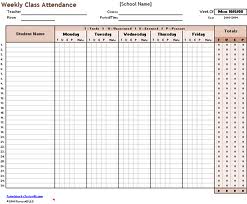 NYC schools keep attendance on bubble sheets. If a student is absent the proper circle gets filled in, if present, no mark. The forms were delivered to the schools blank and the roster printed at the individual schools. My school always printed them badly. The names never lined up with the proper bubbles. I’d try to use a ruler to line them up but most of the time the names were printed on a slant. Try as I might, I’d often mark an absent student present and a present student absent. No matter how many times I showed the skewed sheets the Principal always said that no one else had a problem. And I knew it was a lie.
The most obvious thing she did to tell me it was time to go was assigning me a mentor. On the face of it that sounds very positive but it wasn’t. Three times a week she’d sit in the back of my class and when it was over she’d offer me advice. Invariably, her advice was that “the students are animals. You should leave.” But that wasn’t the worst, it was offensive. I was told “why do you want to be in the classroom? There are plenty of jobs for teachers in the Board of Education offices.” (We were still a Board, not a Department back then.) So not only was I being told to get out, I was being told to get out of teaching. I have no idea what the mentor thought of me or the situation. Even though I knew that everything I told her went right back to the Principal I told her everything in hopes that I could get some real advice. I never did.
But she did write me a nice letter of recommendation that I never used. I still have it.
By February I could not stand going to work in the morning and was throwing as little of myself into the job as I could. While I may have been the most miserable teacher I was not the worst. In the weeks between September and December six teachers had left the school, a huge percentage of our tiny staff of twenty-four. That does not include the teacher who was pushed down the stairs. While the other six left on their own, he, despite being a victim, was somehow blackmailed by the Principal to not make a report and he was the only person, student or teacher, to be investigated in the incident. He left in January, escorted out by security.
My biggest blow came when my friend Catherine, who had a far, far easier time than I did (she had the highest level students) could not take it anymore and quit right at the start of the new year. She left teaching all together.
One day at the start of February I could not stand the thought of going to work to the point that I was physically shaking. I called out of work that day. I had been calling out a lot by then and it got to the point that the secretary didn’t even ask me why anymore.
I got in my car and drove to every high school in Brooklyn handing in resumes. I started at the farthest one and circled back in. I didn’t have much of a resume. In some schools no one would see me and I’d have to leave my resume with a security guard. In other schools I, having no appointment, would have to wait for an hour before I was given a quick and painful interview. The only school I skipped was South Shore, which everyone in the school system knew was a violent pit but somehow the press never bothered them like they did the school I ended up in. (Years later when I was in a postion to know certain things I found out crimes that happened in South Shore that should have have shut it down.)
The cliché goes that you always find the thing you are looking for in the last place you look. And that is true because after you find it you stop searching, so of course it was the last place. But this was literally true in this casebecause I was hired on the last school on my list. And better yet, it was a mere five minutes from my house.
I got there at 3:30, after most kids had left but while the staff was still there. I didn’t know it but they had a vacancy in the English department that they had been unable to fill and were desperate for a teacher.
The right place at the right time.
The Assistant Principal of the English Department, a woman who over the years I would come to admire and respect as the best boss I ever had, not only interviewed me but gave me a quick test. I passed with flying colors, and I do mean “flying” because she grabbed me by the arm, ran with me down the hall and down a staircase, her other arm waving, all the way to the Principal’s office.
“I found a teacher! I found a teacher!” She was screaming with joy.
Anyone else might take that as a warning but it was music to my ears.
The Assistant Principal looked up from his paperwork, asked, “does he have a file number?” I said that I did, he said OK, and that was that.
But I couldn’t start right away. I had to inform my (now) old school and give the school system time to do the paperwork.
I told my old Principal that I was leaving and she didn’t bother to hide her happiness. She already had my replacement lined up. I told some of the teachers but not many. I never really fit in with them and kept to myself a lot. And I never, ever, told the students.
 I had six days left in my time at the middle school and little by little, day by day, my belongings were going home with me. Once I got a room I had filled it but now it was emptying out and by the time I left it was empty. On my last day I walked out with only my near-empty school bag. Despite seeing things disappear daily, the students never put two and two together. On the fourth day one of the students told me that another teacher said I was leaving. I lied. I said I wasn’t going anywhere.
On the fifth day somehow word got out and I was asked by a dozen kids if I was leaving. It was the end of the day, right before I walked them out for dismissal, and I said no. I wasn’t going to give them the satisfaction. They wanted nothing more than to see the last of me. I was the guy who yelled at them all the time.
Believe me, I didn’t like yelling. I am not a yeller. I tried everything to motivate and get through to them but it all just caused chaos and I ended up yelling. I learned from it though, and in my later career I can only recall one or two times when I yelled. By then I knew far more effective- and scary- things to do to students.
On my last day the cat came out of the bag when in the morning another teacher, one of the few I got along with, came to my room during class. She had a going away present. (The teacher’s standard present- a Cross pen and pencil set.) I did not want it. I refused it. It was just so hypocritical, a present from the teachers that didn’t help me, from the school that forced me out, a symbol of the misery I experienced on a daily basis, but I took it for one reason only, because the teacher said she thought I deserved it. I didn’t but I took it out of regard for her.
The rest of the day was a chaotic mess. The same teacher, when she was free, took over my classes just to give me a break for once. And she had the kids make me going away cards, cards which I actually kept for a while. They ended up with me in my new school, in the back of my file cabinet, and I tossed them out about a year later.
At the end of the day before dismissal the kids were being especially wild and as a going away present I, for the only time in my teaching career, told my students just what I thought of them. I won’t go into it but I did tell one student that I’d see him in a few years when he was picking up my garbage.
Not my finest hour.
And then I walked them out of the building, kept walking, and I was gone.
TO BE CONTINUED
Part One appeared in this blog last week and can be found by clicking HERE.




Your Comments