
This is the second of an occasional October series of reports focusing on real life monsters and cryptoids. The first can be found HERE.
Perhaps the most well-known cryptoid, the Loch Ness Monster is perhaps also the most well-known resident of Scotland. Known as “Nessie,” the alleged creature has been reliably spotted since 1933, but reports go back as far as the 7th Century, when Saint Columba, then known simply as “Columba the Monk, who will become a saint some years after his death,” walked along the shores of the River Ness and saved a man from being eaten by a river beast. Skeptics, however, claim that this sort of thing comes up over and over in the narratives of medieval saints, so either this sort of thing happened all the time or there was a lack of imagination among medieval writers.
Loch Ness is a large lake, (“loch” being the Scottish word for “lake”) named after Elliot Ness (1903-1957) who was of Norwegian descent but had a good television show based on his life. The most striking feature of the lake, aside from the fact that the water is murky and the lake nearly dead, is the ancient castle that juts out and looms large, not only above the lake, but in Loch Ness Monster lore.
Castle Urquhart was built in the 13th Century. Although all that remain today are ruins, in its prime the castle was a grand palace, with hourly dances by colorfully costumed characters and nightly fireworks displays. The castle’s first owner, the Lord Disney Urquhart, soon opened castles across Scotland, and Urquhartland was soon followed by Urquhart World and, later, Euro Urquhart, which closed after only a few years of operation.

From the children's book "Dick and Jane go to Loch Ness."
Today it exists as a tourist attraction where the locals sell lots of tacky souvenirs to visitors. It was from the area of the castle in 1934 that the most famous picture of the Loch Ness Monster was taken.
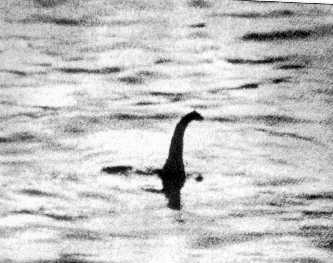
It became known simply as “The Surgeon’s Photograph,” because the man who took it, a surgeon named Dr. Edward Surgeon, did not want his name attached to it due to the affect it may have on his reputation. It purports to show the head and neck of the beast.
This has become the most famous photo taken of the creature, and also the most analyzed. Hundreds of scientists, thousands of hours, millions of dollars have been spent on just this one photo, and recently the effort has paid off, as we can now share the results of the extensive investigation.

Nessie has been described in many ways, but the most common description includes a long neck, a serpentine body, and fins. Moving in the water, it may seem to undulate, or to have humps. Some witnesses claim that it can leave the water and eats local farm stock. Still others claim that it creeps into their bedrooms at night and “makes sweet sweet love” to them.
But what is The Loch Ness Monster? Most people seem to believe that it is some sort of remnant, a prehistoric leftover, if you will. Most theories contend that it seems to match the fossil record of a plesiosaur, an extinct dinosaur. These people go on and on about this, especially when tourists come from America just to see the monster and buy these “experts” pints at the local pub.
Let me set the record straight with these actual facts that you can verify yourself if you don’t believe me, which may be a smart idea.
1- The plesiosaur was cold-blooded and could never live in the loch’s water. It is too cold.
2- The loch is relatively young. During the last ice age it was frozen, top to bottom, and remained that way for around 20,000 years.
3- There is not enough food to support such a large creature. The loch is murky and sunlight does not reach far down. It has a very small ecosystem and supports only a small colony of fish.
But what is it?
Scientists sweep the lake on a regular basis looking for the creature. They use the latest equipment, with high-tech sonar being among the fore due to the extreme lack of visibility in the lake.
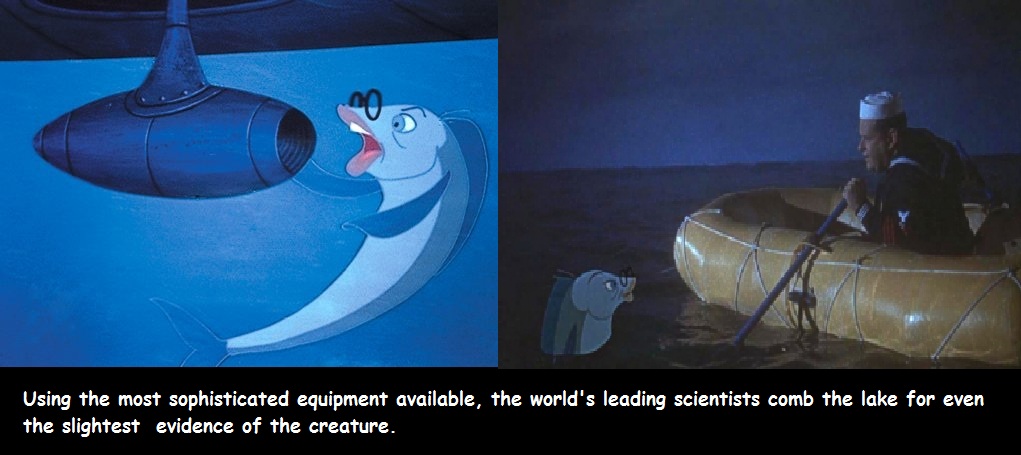
One recent theory has become known as the “Incredible Mr. Nessie” theory.
This has become the prevailing theory. Scientists contend that, as World War Two raged, a sailor decided that, for the war effort, he could best serve his country by becoming a sea monster.
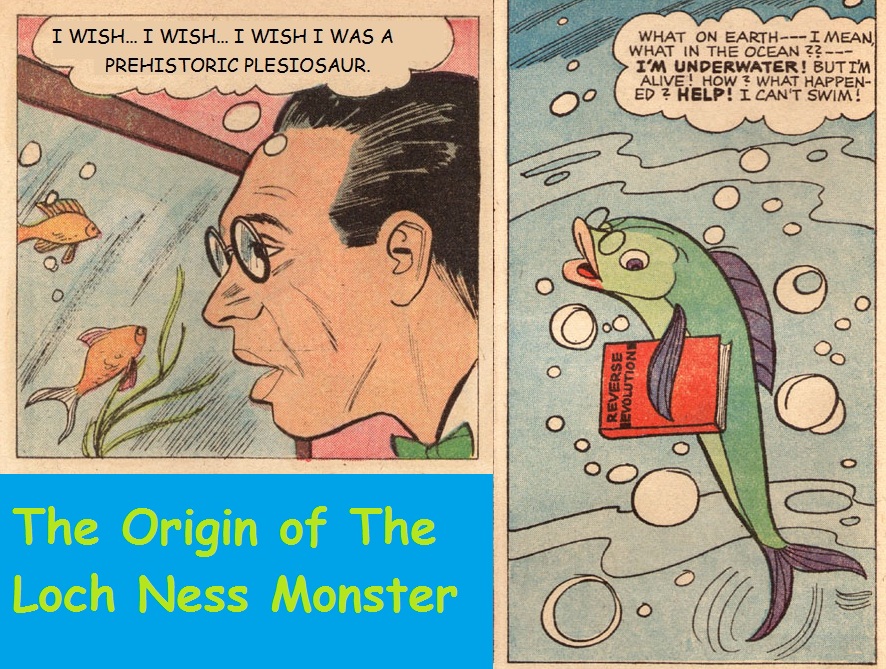
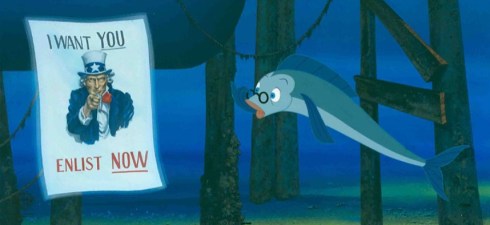
This man became Mr. Nessie, The Loch Ness Monster. Of course, top government officials deny this story, but like anything the government denies, it is assumed to be true.
Mr. Nessie the Loch Ness Monster was America’s top secret weapon against the menace of Scottish Nazi U-Boats patrolling Loch Ness. Using his incredible skills, Mr. Nessie remained unseen throughout his career, but helped lead the allies to victory. Not a single American craft was sunk in Loch Ness during World War Two and that is an indisputable fact.

People still search for the monster today, misidentifying everything from trees and boats to elephants and ugly children for the monster. New theories abound. The monster may be anything from an eel to a hoax to Rupert Murdoch. Even the old standby swamp gas has been thrown into the mix. However, we are no closer to an answer today than we were on May 2nd, 1933, when George Spicer and his wife claimed to see “a dragon or pre-historic creature” prowling around the lake. “Holy shit!” he was quoted as saying in the Inverness Courier, and don’t think that didn’t get them into trouble.
Reports of The Loch Ness Monster have petered out in recent years. Tourists still throng to the lake hoping to catch a glimpse, scientists still zoom around the lake and piss off local fishermen, Castle Urquhart still remains a tourist trap, but the monster himself remains notoriously camera shy.
We think he has better things to do.


Your Comments