
February 6th, 2013

The story begins with a man named Jonathan Harker. We know his name is Jonathan Harker because it turns out that we are not reading Dracula at all, we are reading The Diary of Jonathan Harker. (This book is totally misnamed.) Anyway, Harker is on his way to Transylvania, a wild and desolate place that in the distant place was the center of the US automobile industry but now stands deserted, with crumbling buildings and rampant crime and horror. Oh, sorry, that’s Detroit. Take out the part about the auto industry and the rest still stands. Neither is a place any sane person would want to visit.
Harker is going to see a man named Count von Count Dracula. The Count loves to count things and lives in a filthy castle full of his beloved trash. He is also a vampire, although Harker doesn’t know that. What Harker does know is that every single person he meets tells him not to go to Detroit- I mean Dracula’s castle. They urge him to turn back, they warn him of the evils and horror that await, they tie him up and try to ship him back to England in a box, all to no avail. You see, Harker is a traveling salesman and he is there to sell Amway to Count von Count Dracula and those Amway salesmen don’t take no for an answer.
Things got off to a strange start when Harker’s ride to the Count von Count’s castle arrived. The coachman was wearing a hood pulled low over his face and a pair of Groucho nose/glasses. As Harker later found out, it was none other than The Count himself. Turns out he had fired all of his servants when they ran out of blood.
Things did not go well in Count von Count Dracula’s castle. The food was spoiled, the days were boring and the nightlife sucked… so to speak. Eventually it became clear to Harker that Dracula was not interested in buying any Amway. Problem was he didn’t realize it until Dracula had already departed for London and left Harker locked in the basement with his ex-wives.
Meanwhile, in another book I mean back in England, Miss Lucy Westenwhore was torn between her three lovers. One was a rich American Texan, one was a rich English nobleman, and one was rich, nothing else matters, does it? Well, yada yada yada, nothing much happens for a long time except that Lucy’s friend Mina, who happened to be Harker’s wife, began to wonder where her husband was. She didn’t wonder too loudly, however, being surrounded by rich single guys.
Meanwhile, in a complete and total coincidence of the sort only found in these types of novels that feature complete and total coincidences, right next door to our main characters is an insane asylum. Now if you are anything like me you’d think having a nuthouse next door would be a deal breaker and no way would I live there, but back in those days it was considered pretty cool and as more and more areas of London got gentrified insane asylums popped up everywhere. They were the Starbucks of their time.
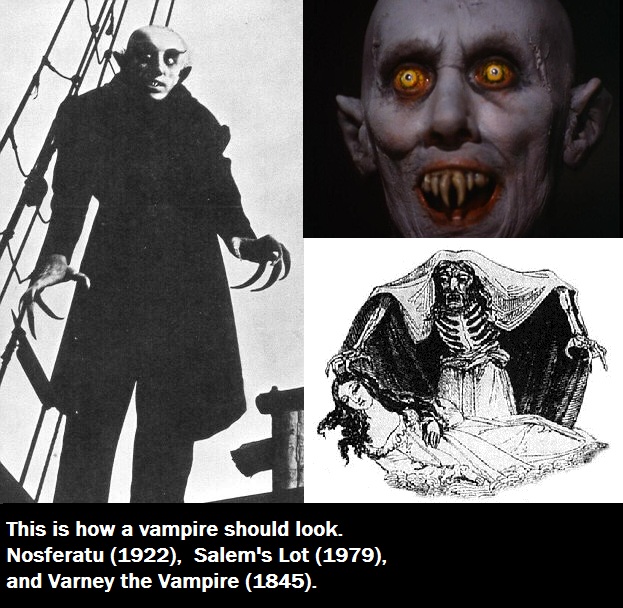
About now I should mention that Dracula has been printed all over the world in dozens of languages and editions. If you are reading the black and white 1931 Universal Studios edition, Dracula wears very elegant evening clothes, as if he is on his way to dinner with the Queen and not actually on his way to dig himself out of his filthy grave. If you are reading the 1958 Hammer Studios version, Dracula is written in color and looks like Christopher Lee. In neither version does he sparkle.
 “Long story short” is an often overused cliché but in this case it is totally accurate. Depending on the edition you are reading, and this is true, Count von Count Dracula does not appear in the middle of the book for almost 200 pages. This is no joke. A lot of the dialogue is like “where’s Dracula? We have to find Dracula” and “where can Dracula be? We have to find him before the sun comes up.” See? Long story short. I just saved you 200 pages. (And somewhere along the way Lucy dies and comes back as a vampire and then really dies. That’s a spoiler, sorry.)
Here is the story in convenient bullet point format. (Convenient for me- less typing.)
- Dracula comes to England by boat and gorges on the all-you-can–eat buffet
- Dracula is invited into the mental asylum by one of the inmates and- hold on to your hat- one of the main characters is a doctor who also lives there, giving Dracula free reign of the house.
- A lot of people get attacked, including the residents of a ghetto who see Dracula in his bat form and try to capture “the black chicken.”
Meanwhile, Dr. “Van” Helsing, the one important character whom I should have mentioned long before this arrives and teaches the Scooby Gang how to defeat a vampire.
HOW TO KILL A VAMPIRE
- Drive a wooden stake through his heart
- Cut off his head
- Trap him under running water
- Expose him to sunlight
- Force him to watch Twilight
- Didja notice the bullet points again? I am so lazy when it comes to typing. Which begs the question of why I am still typing this thought. Hmmmm….
It is also interesting to note that any and all of those methods will also kill a mugger, except maybe that sunlight thing. Just throwing that out there in case you get into trouble.
Anywho, for no reason other than he’s running out of places to hide (in London of all places!) Dracula flees back to his trash-filled Transylvania castle, pursued by the rich white guys who follow his every move by using a strange psychic connection between Mina and the Count. It turns out that they came up as matches on J-Date and that site is never wrong.
Dracula makes it thisclose to his castle and freedom when, again depending on the version you are reading, he gets his head cut off outside the castle, he gets staked in his coffin, or Peter Cushing chases him into the castle where, using a pair of candlesticks held together as a cross, forces the Count into the sunlight where he crumbles into dust, except for his ring, which somehow later turns up later in Detroit on Hardcore Pawn.
This is the first of a series of Count von Count adventures, in which Count von Count Dracula moves to a typical American soundstage and takes up residence in a trashcan, emerging only to teach kids how to count before draining their blood on public television.



 Mr. Blog's Tepid Ride
Your Comments