
February 1, 2012
Once again I had the great pleasure of being interviewed by Jimbo of the OTRr Buffet. We talked about one the Orson Welles era of The Shadow. The site is full of great information about Old Time Radio and you can find links to Jimbo’s other OTR sites there too. Check it out.
Below is an excerpt of the interview. You can find the full interview and more right here.
———
The Shadow was an exciting show. I’ve always enjoyed the Orson Welles – Agnes Moorehead teaming, the best. I asked Bmj2k back to talk about this era of the show and he came through with some terrific insight!
OTR BUFFET – Thanks for doing yet another interview with me. You are one of the few to do two interviews on the OTRr Buffet…
I’m very honored. There have been some very interesting and knowledgeable people interviewed here. I’m happy to be among them.
OTR BUFFET – You and I agreed in advance to talk about The Shadow and more generally, the Orson Welles years as the Shadow. Talk about how Welles carried out the characters of Lamont Cranston/The Shadow and how you feel it was different than the others who played the part.
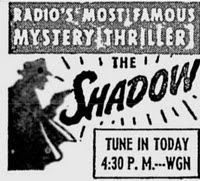 Welles embodied the wealthy young man about town role better than anyone who came after. He had a patrician voice, slightly bored, and he simply sounded like the kind of disaffected playboy who would have traveled the world and studied strange secrets in the Orient. Bill Johnstone, who followed him, sounded more like the average man. Later Lamont Cranstons were sometimes henpecked by Margot. She’d drag Lamont to the opera or he’d follow her around on shopping trips, carrying her bags. Orson Welles’ Lamont was too good for that.
His Lamont usually sounded like he knew more than he was telling. There was something in Orson’s voice that simply sounded mysterious. And that carried over to the Shadow. A lot of the time the story would open and Lamont was already embroiled in the case, as in The Mine Hunters. Other times, like when a madman was disrupting shipping by torpedoing ships from a secret submarine (Death from the Deep) the authorities were powerless but The Shadow simply announced that he was on the job and went to work.
OTR BUFFET – I have only just come to the conclusion that listeners have taken for granted how lucky we were to have the Welles-Agnes Moorehead (as Margo Lane) team doing The Shadow in the late 1930’s. If you think about what kind of careers both had and how noted each are for their acting abilities it’s quite rare to have them teamed up in a production where we really got to hear them stretch themselves in something that wasn’t serious acting. Can you talk about that team and the advantages they had working together as opposed to the other Cranston/Lane teams?
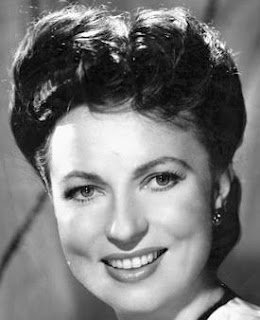 I think you have to appreciate Agnes Moorehead. She starred in one of the most famous OTR stories, Sorry, Wrong Number by Suspense. It was a one-woman tour de force. And while there were many talented actresses to play Margot Lane, Agnes Moorehead may have gone on to the most acclaim.
Orson Welles’ career is noted for the ownership he took over his roles and his productions, but The Shadow was just a job for him. He was such a busy man that often he’d rush into the studio a few minutes before the broadcast and the first time he’d see the script was when he was reading it. He had the great ability to scan only a couple of lines ahead on the page but still imbue the lines with the proper inflection, depth, and meaning. Playing opposite someone as talented as Agnes Moorehead must have made it that much easier for him.
It is no surprise that they both went on to the Mercury Theater on the Air. Orson assembled some great talent there, like Joseph Cotton, Hans Conreid, and Vincent Price, among others.
OTR BUFFET – Is there a favorite episode you have and why?
 I have a few from Orson’s era. They are all very different and each has a very unique feel.
Aboard The Steamship Amazon. The Shadow stops explosive smugglers aboard a luxury liner.
The White God. A madman enslaves the natives of a Pacific island and sets himself up as a god. He uses a giant magnet inside a volcano to cause airplanes to crash.
The Tenor with the Broken Voice. A crazed opera singer who lost his voice kills the singers who replaced him while they sing onstage.
Just by coincidence, these are all from the syndicated Goodrich-sponsored 1938 summer season. The Shadow would get involved in the commercials, intoning how Goodrich tires kept you from swerving off the road in bad weather. The Shadow almost never got involved in other commercials.
OTR BUFFET – There are many episodes in the series that are very hard to listen to because of horrible sound. Do you skip those or do you try and listen to them anyway?
It takes a lot to make me skip an episode of any show, but I’ll put up with more for a show I really enjoy like The Shadow. I prefer it when OTR is not pristine. A little hiss and some crackle add to the enjoyment. In my mind, especially the farther back you go, a great many people heard OTR that way. The technology just wasn’t that good yet. It may or may not be true, but I feel it is more authentic that way. Perfectly crisp and clean OTR sounds too new for my taste. The only way I give up on an episode is if it is simply unlistenable.
OTR BUFFET – Can you think of any performances on radio, TV or film that seem to have been inspired by Welles’ portrayal of the Cranston/The Shadow combo?
The Avenger was a very thinly disguised knock-off of The Shadow, virtually a copy. It only ran for 26 episodes. It wasn’t a bad show, but because it sounds so much like The Shadow it just comes across like a poor imitation.
The Green Hornet is similar to The Shadow in that Britt Reid was cut from the same cloth as Cranston, a kind of wealthy playboy. The only difference was that he had a job running a newspaper, but even so, he was the young, single, rich owner. Even Batman, with his dark cape and penchant for staying the shadows owes a debt here as well. There is an issue of Batman from the 1970’s (#253) when DC owned the rights to The Shadow where the two characters met. Batman and said that The Shadow was one of his inspirations to become a crime fighter. Batman comics from the 1970’s are very much like the mysterious Shadow of the Orson Welles era, very dark and mysterious, often with a gothic feel and a seemingly supernatural menace.
I’m sure there are a whole slew of slouch hat-wearing mystery men who owe something to The Shadow.
OTR BUFFET – How do you rank Welles and Moorehead as far as radio/film actors go?
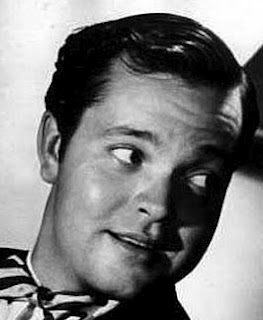 I believe that one of the problems with actors today is that they didn’t work in radio. Radio forces actors to emote and use their voices in ways that they don’t need to in movies or television. I think that working in radio helps you understand acting differently. Of course that doesn’t mean that radio actors make the best movie stars. Visually, there are tons of non-verbal acting dynamics to master as well. And of course in radio you get to hold the script while you work!
Take Agnes Moorehead in The Twilight Zone episode The Invaders. Now take everything I said about radio acting and forget it. She is entirely silent throughout the episode. Clearly she has mastered the art of acting from every angle. People who only know her as Endora in Bewitched need to see her in The Magnificent Ambersons or Hush… Hush, Sweet Charlotte. She had four Oscar nominations in her career.
And as for Orson Welles, better people than I have written about his talent. Simply imagine Citizen Kane if Welles had stayed behind the camera and let someone else star.
OTR BUFFET – Why do you think the Shadow is so often categorized as “horror?” And what genre would you put it in? Superhero? Detective?
I tend to put it in horror too, but it is hard show to categorize because while it would often do straight detective stories with gangsters or bank robbers, try to imagine Sam Spade in The Curse of Shiva, or Phillip Marlowe freeing mind-controlled slaves. Johnny Dollar never fought werewolves.
Many horror writers worked on the show, like Alonzo Dean Cole of The Witch’s Tale and Arch Obler. Sci-fi writer Alfred Bester wrote for The Shadow.
Superhero doesn’t quite fit either, because that genre is, in my mind, defined by over-the-top do-gooders like Superman or Spider-Man. The Shadow is more of an old-fashioned mystery man, a guy who is relatively powerless and more likely to punch-out the bad guy than use X-ray vision, True, Lamont Cranston had mental powers, but as every show opening pointed out, we could have them too if we’d travel to the Orient and study under a mystic for a good part of our lives.
OTR BUFFET – Thanks again for your time and knowledge spent in answering these for the OTRr Buffet!
Thanks for asking me! I enjoyed doing this and I hope the readers enjoy it too.


Your Comments